When people think of a restaurant with a Michelin star, they often imagine the complete experience: exceptional food, elegant surroundings, knowledgeable sommeliers, and flawless service.
But there is an important distinction.
Michelin Stars are awarded for the food — not for the service.
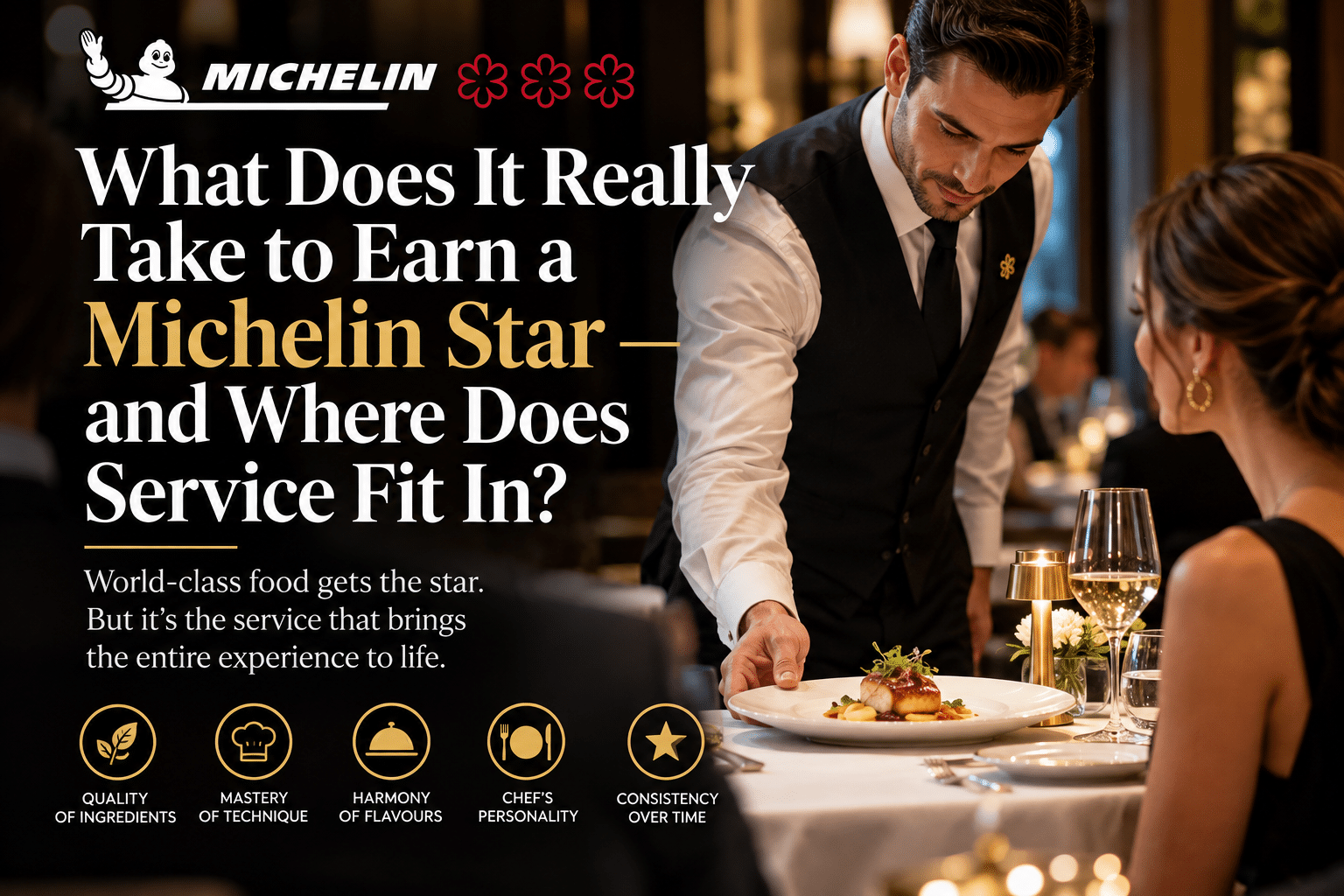
According to the Michelin Guide, inspectors evaluate restaurants using five universal criteria: the quality of the ingredients, mastery of cooking techniques, harmony of flavours, the personality of the chef expressed through the cuisine, and consistency across the menu and over time.
So if service doesn’t determine whether a restaurant receives a Michelin Star, where does the waiter fit into the Michelin experience?
The answer is: almost everywhere else.
What a Michelin Star Actually Means
Michelin describes its Stars simply:
One Star represents very good cooking in its category.
Two Stars recognise excellent cooking worth a detour.
Three Stars represent exceptional cuisine worth a special journey.
The important point is that inspectors apply those distinctions primarily to what arrives on the plate.
A restaurant does not receive another Star because its dining room is more luxurious. It doesn’t lose one simply because another restaurant has more expensive furniture. And excellent service by itself cannot turn non-star-level cooking into Michelin-starred cooking.
This distinction matters because it helps us understand what makes the world’s great restaurants work.
The kitchen earns the Star.
But the guest experiences much more than the Star.
Austria’s Michelin Scene Continues to Grow
The 2026 Michelin Guide Austria provides a good example.
Austria now has 101 Michelin-starred restaurants, including 22 restaurants newly awarded One Star and one newly awarded Two Stars in the 2026 selection.
For the restaurants receiving those distinctions, a Michelin Star can mean international attention, new guests and considerably higher expectations.
A guest entering a Michelin-starred restaurant isn’t simply arriving for dinner anymore.
They arrive expecting something exceptional.
And this is where the service team becomes critical.
The Kitchen Creates the Dish. Service Delivers the Experience.
Imagine a chef has spent months developing a dish.
The ingredients have been carefully sourced. The technique has been perfected. The plating has been considered down to the smallest detail.
Then the plate leaves the kitchen.
From that moment, much of the guest’s experience is in the hands of the service team.
Was the table prepared correctly?
Was the dish served at the right moment?
Can the waiter explain what the guest is about to eat without delivering a five-minute speech?
Does the server understand the ingredients and preparation?
Can the sommelier recommend a wine that complements the dish?
Does the team understand when guests want conversation and when they want privacy?
Can they recognise a problem before the guest has to complain?
Can the restaurant maintain its rhythm when every table is occupied?
These things may not determine the Michelin Star itself.
But they absolutely influence how the guest experiences a Michelin-starred restaurant.
Fine Dining Service Isn’t About Being Formal
There is another misconception worth addressing.
Great fine-dining service isn’t simply about expensive uniforms, perfectly polished glasses or remembering which side of the guest to approach.
Those things matter.
But great service goes much deeper.
It requires technical knowledge, observation, timing, communication and emotional intelligence.
A great waiter understands the menu but also understands people.
They know when to explain.
When to recommend.
When to sell.
When to disappear.
And when something goes wrong, they know how to recover the experience without turning a small problem into a large one.
That level of service rarely happens accidentally.
It comes from training, standards, repetition, and experience.
Michelin Recognises Service Too
Michelin itself makes this distinction particularly interesting.
Although service isn’t one of the criteria used to award Michelin Stars, the Guide separately recognises outstanding hospitality through distinctions such as its Service Award.
That tells us something important about exceptional restaurants.
Food and service have different functions, but they ultimately meet at the same table.
A brilliant kitchen can create an extraordinary dish.
A brilliant service team makes sure the guest experiences that dish — and the entire evening surrounding it — as the restaurant intended.
The Star May Be for the Restaurant. The Experience Belongs to the Team.
There are chefs behind every Michelin Star.
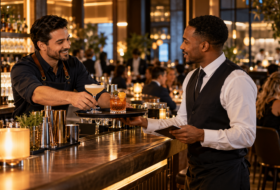
But there are also commis waiters, chefs de rang, head waiters, sommeliers, restaurant managers, runners, bartenders and many other hospitality professionals working together every night.
The Michelin inspector may ultimately judge what’s on the plate when deciding whether that Star belongs on the restaurant.
The guest judges something much bigger.
They judge the experience.
And that is why professional service still matters enormously at the highest level of hospitality.
The chef may create Michelin-starred food.
But delivering a Michelin-level experience takes an entire team.
Because great service isn’t about pretending to be sophisticated.
It’s about knowing exactly what you’re doing — and why.