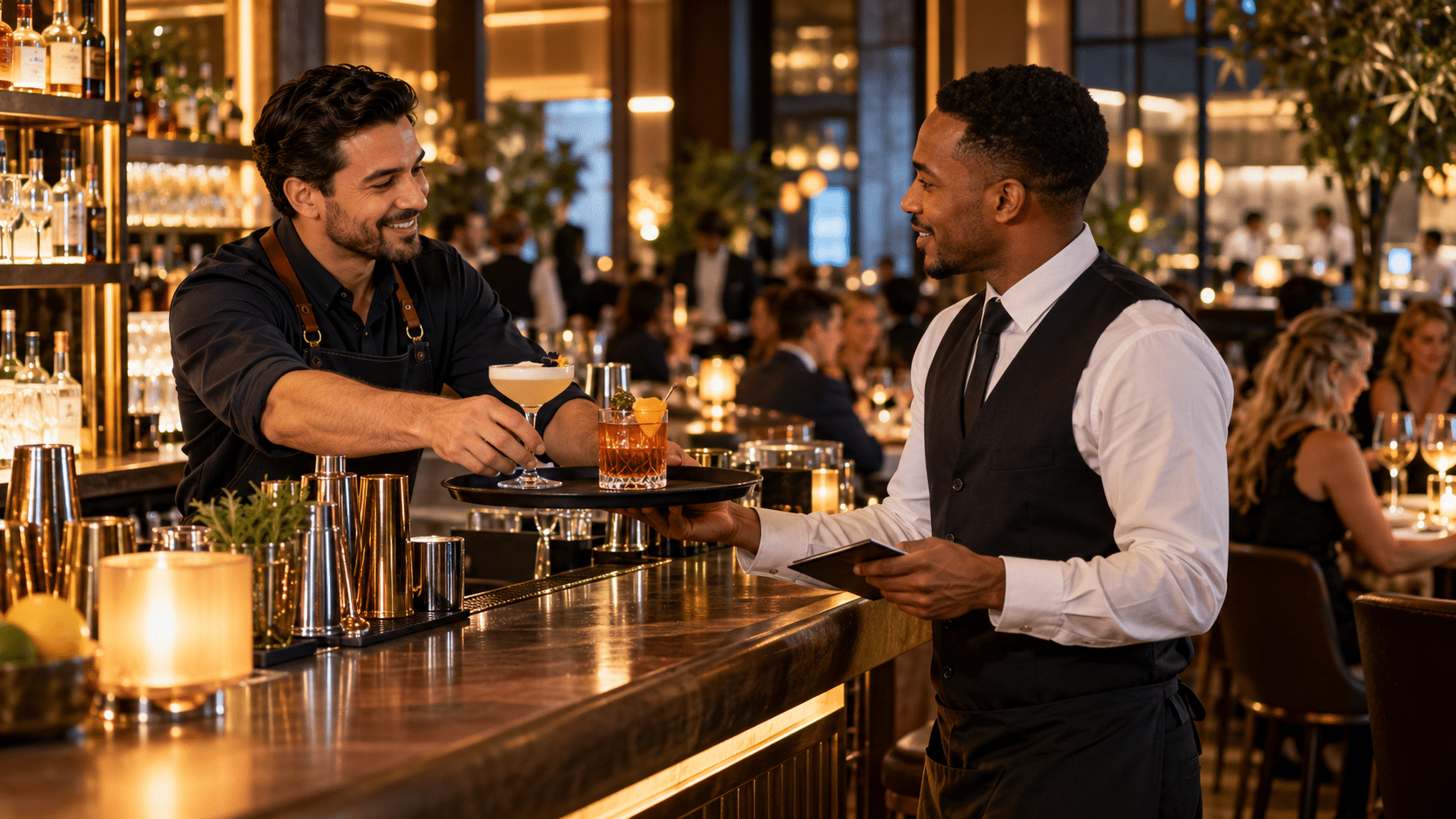
In a busy restaurant or event, bartenders and waiters depend on each other.
When communication breaks down, drink orders are delayed, mistakes multiply and guests receive inconsistent service. When both teams work together, service becomes faster, calmer and more professional.
Here are the practical habits that make the biggest difference.
Start Before the Guests Arrive
Good teamwork begins with a short pre-service briefing.
Bartenders and waiters should review:
- Drink specials and unavailable items
- Large reservations and expected busy periods
- VIP guests and special occasions
- Allergies and dietary requirements
- Complicated drinks that require additional preparation
- Responsibilities during the busiest parts of service
For events, the team should also review the guest count, service style, bar arrangements and schedule.
If bartenders know that a large group will arrive at 7 p.m., they can prepare glassware, garnishes and popular ingredients in advance. If waiters know that a particular cocktail takes longer to prepare, they can set realistic expectations with guests.
Five minutes of preparation can prevent many problems later.
Make Every Drink Order Clear
Incomplete orders waste time and create unnecessary tension between the bar and service teams.
Waiters should enter every important detail in the ordering system, including:
- Spirit or brand preferences
- Requested modifications
- Allergies
- Garnish changes
- Glassware requirements
- Whether the drink should be prepared without alcohol
Bartenders should ask for clarification when an order is unclear instead of guessing. One quick question is better than preparing the wrong drink and starting again.
Restaurants should also have a clear system for communicating urgent orders and handling verbal changes. Important information should never depend entirely on somebody remembering a hurried conversation during a busy shift.
Communicate Delays Immediately
Guests are usually more understanding when they receive an honest update.
If the bar is overwhelmed, an ingredient is unavailable or a drink requires extra preparation, the bartender should inform the waiter immediately.
A simple message—“This order will take another five minutes”—allows the waiter to speak with the guest, suggest an alternative or reassure them that the order is being prepared.
Without that information, the waiter cannot manage the guest’s expectations. The delay then feels longer, even when the actual waiting time has not changed.
Share Only the Information That Matters
Bartenders need certain information to prepare the right drink, but they do not need the guest’s entire story.
Useful information might include:
- The guest prefers a less-sweet cocktail
- The drink must be alcohol-free
- The guest has an allergy
- The table is celebrating a special occasion
- The order must be ready at a specific time
The key is relevance. Good communication gives colleagues the information they need without distracting them from their work.
Support Each Other During the Rush
 Busy periods can arrive suddenly. The bar may receive several large orders at once while waiters are handling full sections.
During these moments, teamwork becomes essential.
When possible, waiters can help by:
- Collecting completed drinks promptly
- Keeping the service area clear
- Returning empty glassware to the correct location
- Restocking approved basic items
- Identifying genuinely urgent orders
Bartenders can support waiters by:
- Organizing completed drinks clearly
- Prioritizing orders consistently
- Communicating significant delays
- Confirming unavailable ingredients quickly
- Avoiding unnecessary arguments during service
Helping does not mean abandoning your own responsibilities. It means noticing where a small action can prevent a larger problem.
Whenever one employee completes another person’s task, they should communicate it. A quick handover prevents duplicate work and forgotten orders.
Respect the Pressure on Both Sides
Conflict often begins when one group believes it is working harder than the other.
A bartender may be preparing numerous orders while managing stock, cleaning equipment and serving guests at the bar. At the same time, a waiter may be taking orders, delivering food, answering questions, processing payments and handling special requests across several tables.
Comparing workloads rarely improves service.
The useful question is not, “Who is busier?” It is, “What needs to happen next for the guest?”
Mistakes and delays should also be discussed away from guests. Blaming a colleague on the restaurant floor looks unprofessional and damages trust within the team.
Solve the immediate problem first. Discuss the cause after service.
Coordinate Closely at Events
Weddings, corporate functions and private parties create additional challenges because large numbers of guests often need service at the same time.
The schedule may include welcome drinks, passed beverages, speeches, dinner service and specific opening or closing times for the bar.
Bartenders and waiters for events should work from the same timeline and understand how their responsibilities affect each other.
Before service begins, the team should confirm:
- When welcome drinks must be ready
- Who will distribute and collect glassware
- How table orders will reach the bar
- When service must pause for speeches
- Who will monitor stock during the event
- How last orders and bar closure will be communicated
A shared timeline prevents drinks from arriving at the wrong moment and helps the entire event feel professionally managed.
Learn How the Other Role Works
Waiters do not need to become bartenders, and bartenders do not need to become waiters. However, both benefit from understanding the other role’s workflow.
Waiters who understand basic drink preparation can explain delays more accurately and avoid unrealistic promises. Bartenders who understand table service can recognize why timing matters for a particular course, celebration or guest request.
Short cross-training sessions can help staff understand:
- Which drinks require more preparation
- How the bar organizes incoming orders
- How table numbers and seat positions are used
- When waiters need drinks to match food service
- Where common communication failures occur
Understanding another person’s pressure points makes cooperation easier.
Keep the Focus on the Guest
Guests do not care which department caused a problem. They remember whether the team solved it professionally.
A waiter who sends a clear order helps the bartender prepare the correct drink. A bartender who communicates a delay helps the waiter manage the table. Both actions contribute to the same guest experience.
Strong hospitality teams do not operate as separate departments protecting their own territory. They communicate, adapt and help one another at the moments that matter.
The result is smoother service, fewer mistakes, happier guests and a better opportunity for everyone to earn stronger tips.